A seamless designation alone does not tell you whether a pipe will survive pressure, heat, corrosive chemicals, cyclic loading, or low-temperature service. You will be able to match the manufacturing route, material grade, dimensions, testing, documentation, and delivery controls to the actual duty before approving a supplier or accepting a shipment.
Key takeaways
- Define pressure, temperature, chemistry, loads, and dimensions before choosing pipe.
- Choose seamless or welded pipe according to duty, code, inspection, and availability.
- Match grade, outside diameter, schedule, wall thickness, and standard to the design.
- Verify certificates, heat numbers, dimensions, surface condition, and traceability before acceptance.
What Makes a Pipe Suitable for High-Performance Service?
Define the service envelope before seamless pipe selection: design pressure, design temperature, fluid chemistry, flow-related damage, loading, and required dimensions. In high-performance industrial applications, suitability comes from matching each limit to the governing code and material—not from the word seamless alone.
| Service condition | What to define | Why it changes the choice |
|---|---|---|
| Pressure | Design pressure, outside diameter, minimum wall after tolerance, corrosion allowance, allowable stress, and code | Schedule alone cannot establish pressure capacity; ASME B31.3 calculations may differ from another code |
| Temperature | Normal, upset, start-up, and shutdown temperatures | ASTM A106/A106M suits seamless carbon-steel high-temperature service; low temperatures can require impact-tested pipe such as ASTM A333/A333M |
| Environment | Chlorides, acids, hydrogen sulfide, moisture, and erosion risk | Sour service requires ISO 15156/NACE MR0175 controls, including applicable part, hardness, heat treatment, and qualification records |
| Loading and fit | Pressure cycles, vibration, thermal expansion, wear, outside diameter, wall thickness, and connection dimensions | Fatigue and fracture risk require specified Charpy temperature, energy, specimen orientation, and acceptance criteria |
Nominal pipe size is not the bore and does not uniquely define capacity. Check outside diameter and wall thickness against ASME B36.10M for carbon and alloy steel, or ASME B36.19M for stainless pipe, where schedules carry an S designation.
Also specify the material grade. Seamless pipe can be carbon, low-alloy, stainless, or nickel alloy, while ASTM A53/A53M is not an automatic substitute for ASTM A106/A106M in process service. The standard must match the temperature, corrosion, toughness, and weldability demands.
Seamless or Welded: Which Manufacturing Route Fits the Duty?
The absence of a longitudinal weld justifies seamless pipe when a weld-related failure would carry exceptional consequences: high-pressure or high-temperature process service, severe cyclic loading where fatigue resistance matters, or a specification that expressly requires seamless construction. Seamless is not automatically safer; production can introduce eccentric walls, inclusions, laps, or centerline defects.
| Option | Strength | Better practical choice when |
|---|---|---|
| Seamless | No longitudinal weld or weld zone | Pressure, temperature, cyclic loading, or specification risk makes weld avoidance worth the added cost and limited size availability |
| Welded | Controlled dimensions, efficient production, and inspectable weld quality | Large diameters, long runs, moderate service conditions, and projects requiring predictable supply and economical fabrication |
Welded pipe becomes the better practical choice when its manufacturing standard, welding procedure, and weld inspection address the actual service risk. A qualified weld does not erase every concern, but it gives you a defined inspection record instead of treating “seamless” as a guarantee of soundness.
- Confirm the product specification: ASTM A106/A106M is for seamless carbon-steel pipe in high-temperature service, while ASTM A53/A53M covers both seamless and welded pipe and is not an automatic A106 substitute.
- Check whether the purchase specification permits welded construction and names required examination, such as radiographic or ultrasonic testing of the seam.
- Compare outside diameter, wall thickness, material grade, and delivery availability before choosing route; seamless may be impractical for large sizes, while welded pipe may be unsuitable when the governing specification prohibits a longitudinal weld.
How Do Material Grade and Pipe Standard Change the Decision?
Choose the grade from the operating environment, then choose the pipe standard that legally and technically covers the duty. “Seamless” describes manufacture; it does not guarantee temperature strength, corrosion resistance, toughness, or weldability.
| Material family | Relevant choice | Use it when |
|---|---|---|
| Carbon steel | ASTM A106 for seamless high-temperature service; ASTM A53 for general pressure, mechanical, or galvanized applications | Select A106 for process piping where elevated-temperature properties matter. Do not treat A53 as an automatic substitute. |
| Low-alloy steel | ASTM A335 for seamless elevated-temperature service; ASTM A333 for low-temperature service | Use chromium-molybdenum grades for heat resistance and creep strength; specify A333 grades when impact toughness at subzero temperature governs. |
| Stainless steel | Grade and product standard matched to the corrosive medium | Choose chromium-nickel or molybdenum-bearing grades for oxidation, acids, chlorides, or wet service. Specify pickling, passivation, surface finish, packaging, and iron-contamination controls. |
| Nickel or other alloy | Alloy-specific specification and heat treatment | Use it when chloride stress corrosion, severe reducing or oxidising chemistry, or extreme temperature exceeds stainless-steel capability. |
The purchase order must name the exact grade, heat treatment, test requirements, and design code. For low-temperature, cyclic, or fracture-critical service, state Charpy test temperature, absorbed energy, specimen orientation, and acceptance criteria; pressure rating alone does not prove toughness.
Check dimensions separately: ASME B36.10M covers wrought carbon and alloy steel pipe, while ASME B36.19M covers stainless pipe and uses “S” schedule designations. Request a heat-traceable certificate, such as EN 10204 3.1 or specified 3.2 documentation, rather than accepting only a nominal grade.
How Do Outside Diameter, Schedule, and Wall Thickness Establish Pressure Capacity?
A pipe schedule is only a dimensional designation; it does not prove pressure capacity. Check the nominal pipe size against the actual outside diameter and wall thickness in the dimensional standard: ASME B36.10M covers carbon and alloy steel pipe, while ASME B36.19M covers stainless steel and uses “S” schedule designations.
Verify the selection in this order:
- Pressure: Apply the governing design code, such as ASME B31.3, using the outside diameter, allowable stress at design temperature, manufacturing quality or joint factor, and the minimum wall after negative thickness tolerance and corrosion allowance. Two pipes with the same pipe schedule can have different allowable pressures under different codes.
- Wall: State whether the purchase requirement means nominal wall, calculated minimum wall, or measured minimum wall. Require a defined inspection sample and acceptance method; nominal wall alone can conceal a thinner delivered section.
- Temperature: Check allowable stress at the maximum design temperature, then specify Charpy test temperature and absorbed-energy criteria for low-temperature, cyclic, or fracture-critical service. Pressure rating does not guarantee impact toughness.
- Corrosion: Deduct the design corrosion allowance and confirm that the selected grade withstands the fluid, concentration, temperature, and exposure period. For stainless or nickel alloys, specify pickling, passivation, surface finish, packaging, and iron-contamination controls.
- Installation: Confirm the actual outside diameter, length, end preparation, flange or fitting compatibility, bend radius, and available clearance. A pressure-adequate wall still fails the project if it cannot fit or connect.
What Should You Verify Before Accepting Pipe from a Supplier?
Accept the pipe only after the paperwork, markings, test results, and condition agree with the purchase order. The manufacturer’s test certificate must identify the heat number, grade, dimensions, heat treatment, chemical composition, tensile results, and the actual pipes or bundle supplied.
For routine third-party certification, request EN 10204 3.1; specify EN 10204 3.2 when independent inspection validation is required.
- Match the heat number on the certificate to the stencil, tag, and bundle label. A similar grade name does not prove equivalence across ASTM, API, or EN standards.
- Confirm hydrostatic testing details: test pressure, hold time, standard, result, and pipe identity. Hydrostatic testing checks pressure-containing integrity; it does not replace ultrasonic, eddy-current, or electromagnetic examination.
- Require the stated NDE method, examination extent, acceptance criteria, and report format. “Tested” alone is not an adequate requirement.
- Check outside diameter, wall thickness, length, end preparation, straightness, ovality, dents, gouges, laminations, corrosion, and damaged threads.
- For low-temperature or fracture-critical service, verify Charpy test temperature, absorbed-energy value, specimen orientation, and acceptance criteria.
- For stainless or nickel alloys, inspect surface cleanliness, heat tint, passivation, packaging, and signs of embedded iron or chloride contamination.
- Keep pipes capped, raised off wet ground, separated by grade and heat, and protected from rain, salts, and carbon-steel debris.
| Evidence | What it proves | Hold the shipment when |
|---|---|---|
| Certificate and marking | Traceability | Heat numbers do not match |
| Hydrotest report | Pressure integrity | Test conditions are missing |
| NDE report | Discontinuity control | Method or acceptance criteria are absent |
Ask Vikram And Company to demonstrate heat-level traceability, controlled storage, and a documented material comparison before treating a substitute as interchangeable. If the equipment falls under the EU Pressure Equipment Directive, request the complete conformity and material dossier, not only a generic certificate.
Related products
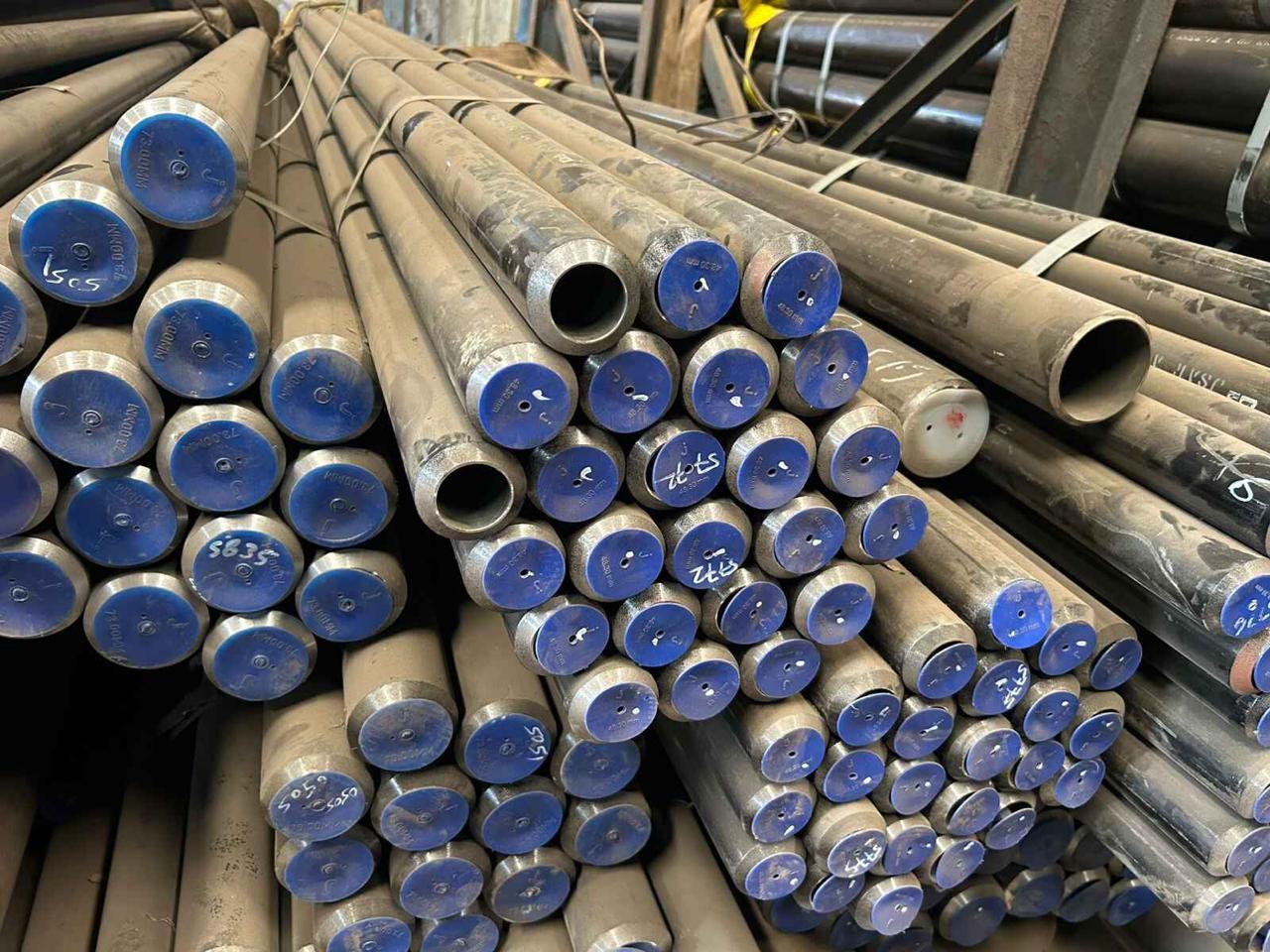 | Seamless Tubes We supply seamless tubes as part of our industrial pipe and tube range. View product → |
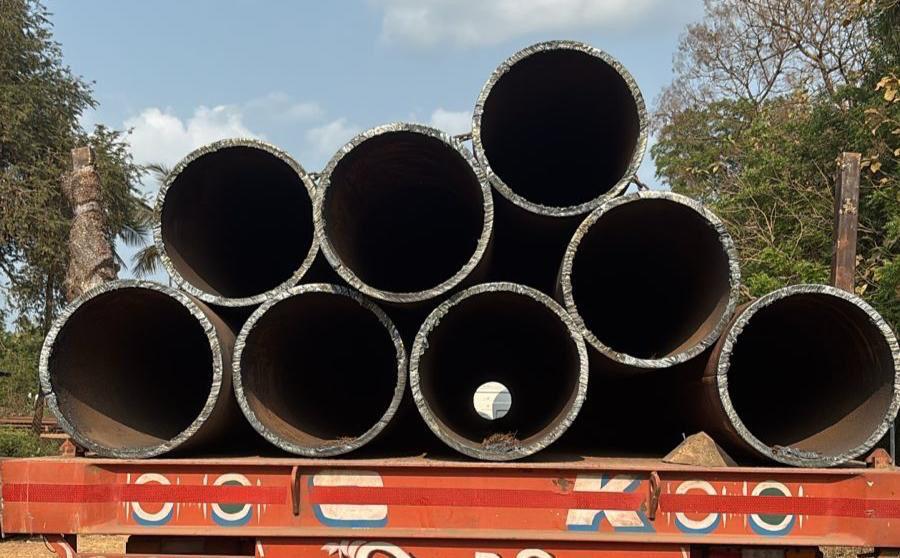 | Seamless Pipes We supply MS/CS seamless pipes for customers seeking seamless pipe solutions for industrial and project requirements. View product → |
Frequently asked questions
What makes a pipe suitable for high-performance industrial service?
Suitability depends on the complete service envelope: design pressure, design temperature, fluid chemistry, erosion or corrosion risk, external loads, and required dimensions. Match each limit to the governing code and material grade.
Is seamless pipe better than welded pipe?
Neither route is automatically better. Choose seamless pipe when the specification, pressure duty, temperature, size range, or inspection plan requires it; choose welded pipe when its qualified manufacturing route, weld controls, testing, and dimensional availability meet the duty.
How do material grade and pipe standard affect selection?
The material grade controls strength, toughness, corrosion resistance, and temperature performance. The pipe standard defines dimensions, manufacturing requirements, tests, tolerances, and acceptance criteria, so confirm both against the project code.
How do outside diameter, schedule, and wall thickness affect pressure capacity?
Outside diameter and wall thickness determine the pipe geometry used in pressure calculations. Schedule identifies a standardized wall thickness for a given diameter, but final capacity also depends on material strength, design temperature, weld efficiency, corrosion allowance, and the governing code.
What should you verify before accepting industrial pipe from a supplier?
Check the purchase specification, pipe standard, grade, size, schedule, heat number, marking, mill test certificate, chemical and mechanical results, dimensional measurements, surface condition, required nondestructive tests, and traceability.
Related products
 | Alloy Steel Pipes & Products We supply alloy steel pipes as part of our alloy steel product range for industrial and project sourcing requirements. View product → |
 | Alloy Steel Pipes & Products We supply alloy steel products for businesses looking for industrial steel sourcing support. View product → |