A dependable GI pipe supplier proves more than availability: the supplier must identify the steel, control dimensions and zinc coating, deliver the ordered quantity, and resolve discrepancies with evidence. By the end, you will have a document checklist, quote-comparison method, receiving inspection plan, and supplier-screening test for industrial purchases.
Key takeaways
- Define grade, dimensions, coating and standards before requesting quotes.
- Ask for heat numbers, test certificates and documents linking pipes to production lots.
- Check zinc coating, wall thickness, diameter and pipe ends against service demands.
- Compare delivered cost, inspection risk, lead time and nonconformance handling—not rate alone.
Define reliability before you request a quotation
A reliable GI pipe supplier can prove consistent grade, dimensions, traceability, fulfilment and delivery control before you place an order. For industrial pipe procurement, a low rate is not evidence; a document trail that connects the quoted pipe to a defined production lot is.
1. Request a material test certificate for the proposed grade. Check the manufacturer’s identity, applicable standard, nominal size, wall thickness, chemical results, mechanical results and heat or cast number. Reconcile that number with markings, tags or bundle labels. “Complies with ASTM” without test values and heat identification is weak evidence.
2. Ask which certificate type will be supplied. Under EN 10204, a 3.1 certificate contains specific results issued by the manufacturer’s independent inspection department; a 3.2 certificate adds purchaser or officially designated inspector validation. Record the batch or lot reference in the quotation.
3. Separate galvanizing evidence from pipe-integrity evidence. Request zinc coating thickness or mass, test method, sampling frequency and acceptance limits; visual appearance cannot prove internal or weld-area coverage. For hot-dip galvanizing of completed pipe, check the specified requirement against ISO 1461. A continuously galvanized strip certificate does not automatically prove compliance.
4. For pressure, fire-water or process service, require the applicable hydrostatic or other test result linked to the heat or lot. Also ask for dispatch lead time, bundle identification, shortage handling and the named contact for nonconforming material.
A supplier that cannot show these records before quoting leaves you to discover inconsistency after delivery. Treat vague certificates, untraceable bundles and undefined rejection procedures as procurement risks.
Write the specification so suppliers cannot compare different pipes
Put the pipe standard, dimensions, service and evidence requirements in writing; “GI pipe” leaves suppliers free to quote unlike-for-like material.
| Standard | State explicitly | Do not accept as a substitute |
|---|---|---|
| IS 1239 | Applicable part, grade, size and end condition | ASTM or EN material without engineer approval |
| IS 3589 | Grade, outside diameter, wall thickness and test requirement | A nominal-size-only quotation |
| ASTM A53/A53M | Grade, Type E or S, schedule and galvanized condition | A coating certificate as proof of pressure integrity |
| EN 10255 | Series, grade, threading or welding use and length | Another dimensional series without approval |
List these technical details in both the enquiry and purchase order:
- Quantity, unit of sale, outside diameter, nominal size, wall thickness or schedule, manufacturing type, grade, pipe length and length tolerance.
- Plain, beveled, threaded or grooved ends; thread type and protective caps; galvanizing standard, coating thickness or mass, test method, sampling frequency and acceptance limits.
- Intended service: pressure, fire-water, process, structural or threaded use. State the design pressure and required hydrostatic test where applicable.
- Heat number, batch or lot reference, marking, packing method and traceability for every bundle.
Name the documents: material test certificate, galvanizing certificate and applicable pressure-test report. Request EN 10204 type 3.1 or 3.2 explicitly; “certified material” is not precise enough. State quantity, delivery date and location, freight, taxes, payment terms, quotation validity, packing charges and the rule that substitutions require written approval.
Check whether the galvanizing and pipe geometry fit the service
Select the pipe form and coating from the service, not from the label “GI.” A hot-dip galvanized pipe is coated after fabrication, while continuously galvanized strip is formed into tube after the sheet receives zinc. An electro-galvanized pipe uses an electrically deposited coating and is not an automatic substitute for either option.
| Option | What it means | When it applies |
|---|---|---|
| Hot-dip galvanized pipe | Completed pipe receives a zinc coating; ISO 1461 may govern the coating | Exposed structural, utility, outdoor, or corrosive service when the project specifies it |
| Electro-galvanized pipe | Zinc is deposited by electroplating, usually with a thinner coating | Controlled indoor conditions where the engineer accepts its corrosion performance |
| Black or galvanized steel pipe | Pipe specification governs dimensions, grade, and integrity; coating is a separate requirement | Pressure, fire-water, gas, or process service |
1. State outside diameter, wall thickness or schedule, length tolerance, end condition, grade, manufacturing type, and intended use. Nominal size alone cannot distinguish pipes with different dimensions.
2. For pressure or fire-water service, require the applicable hydrostatic or other product-integrity test certificate, linked to the heat or lot. A zinc-coating certificate does not prove pressure integrity.
3. Name the pipe standard, such as ASTM A53/A53M or EN 10255, and do not accept substitution without engineering approval. For threaded work, specify ASME B1.20.1, thread length, taper, squareness, and post-galvanizing condition.
4. Require coating records against ISO 1461 where applicable. Agree repair procedures before cutting or threading; ASTM A780 covers zinc-rich paint, zinc-alloy materials, and sprayed-zinc repairs for damaged areas.
Inspect the delivery and control nonconforming material
Do not release a bundle to production until it matches the purchase order, packing list, and certificates. During GI pipe inspection, count bundles, pieces, and stated lengths; check nominal size, wall thickness, end condition, straightness, dents, crushed ends, exposed steel, and transport damage. Record findings with photographs before unloading is complete.
- Match each bundle tag and pipe marking to the ordered grade, size, quantity, and heat number. Complete heat number verification by reconciling the marking with the material certificate; the certificate must identify the manufacturer and report chemical and mechanical results.
- Inspect the zinc surface for bare patches, flaking, excessive roughness, blocked ends, and damage from lifting or threading. A zinc coating inspection based only on appearance cannot establish thickness or mass; use the purchase-order test method, sampling rate, and acceptance limits.
- Treat white rust as evidence of wet storage with restricted airflow, not automatic proof of base-metal corrosion. Ask for the exposure history and assess the severity, persistence, and effect on the specified coating.
- For pressure, fire-water, or process service, match the hydrostatic or other required test certificate to the pipe heat or lot. A galvanizing certificate does not prove pressure integrity.
Quarantine shortages, damaged pipes, missing certificates, and failed measurements in a marked area. Issue a nonconformance report stating the bundle, heat number, quantity, defect, photographs, and required response; notify the supplier against a fixed deadline. Do not cut, thread, repair, or install the material until written disposition is agreed.
For damaged or uncoated zinc, specify an ASTM A780 repair method and reinspection before acceptance.
Compare suppliers on delivered value, not the lowest pipe rate
A low GI pipe quotation is not the lowest delivered cost if it creates rework, unloading delays, or replacement disputes. Convert every GI pipe quotation into a like-for-like comparison using outside diameter, wall thickness or schedule, grade, manufacturing standard, galvanizing requirement, length, quantity, and end condition.
| Item | Quotation A | Quotation B | What to decide |
|---|---|---|---|
| Pipe price | Lower rate | Higher rate | Confirm both quotes describe the same standard, grade, wall and coating |
| Cut-length tolerance | Not stated | Stated in millimetres | Reject the cheaper ambiguity; short lengths can disrupt fabrication |
| Freight and unloading | Excluded | Included to your site | Add crane, labour, vehicle and waiting charges before comparing totals |
| Delivery commitment | Verbal estimate | Written date and dispatch plan | Choose the promise tied to stock or a documented replenishment date |
| Replacement terms | “Subject to inspection” | Written period and collection process | Prefer terms covering shortages, damage and failed certificates |
A dependable supplier answers technical questions before the purchase order, identifies stock versus mill production, and sends the material test certificate, heat number, galvanizing record and packing quantity without repeated chasing. Ask whether threaded ends comply with ASME B1.20.1 when that standard applies; “threaded” alone is not enough.
Use the same test for Vikram And Company as for any stockist:
- Can it confirm quantity by size, bundle count and dispatch date?
- Will it notify you before substituting ASTM A53, IS 1239 or another standard?
- Does it record shortages and replace nonconforming pipe without making you prove the same defect twice?
The supplier that documents these answers is cheaper to manage, even when its pipe rate is not the lowest.
Related products
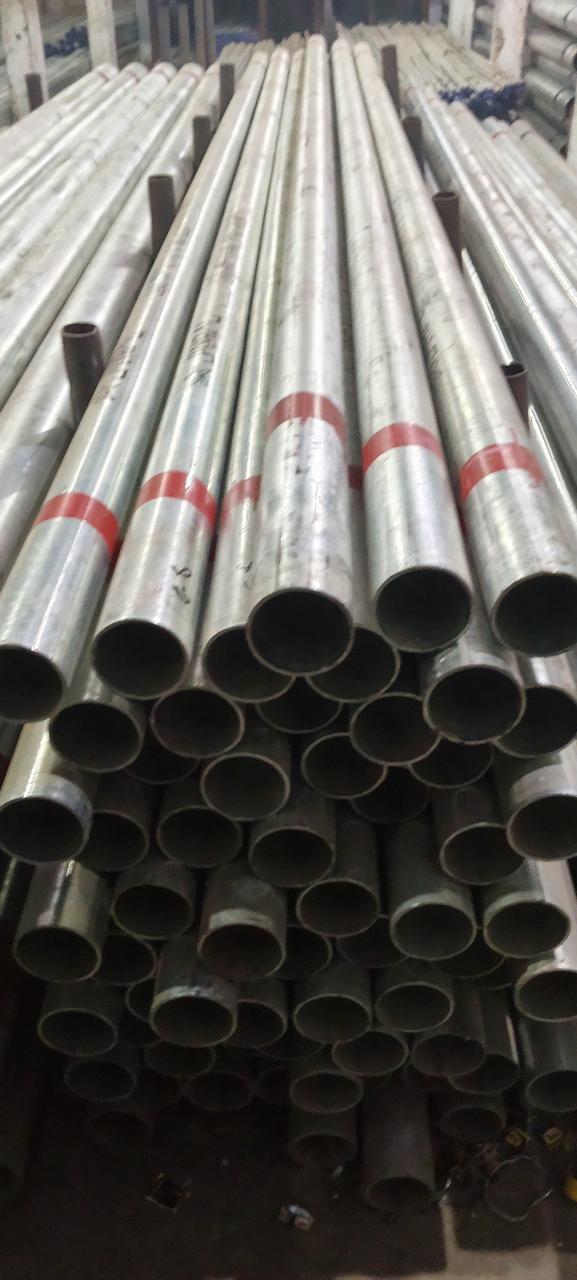 | GI Pipes We supply GI round pipes as part of our range of galvanized iron piping solutions for industrial and project requirements. View product → |
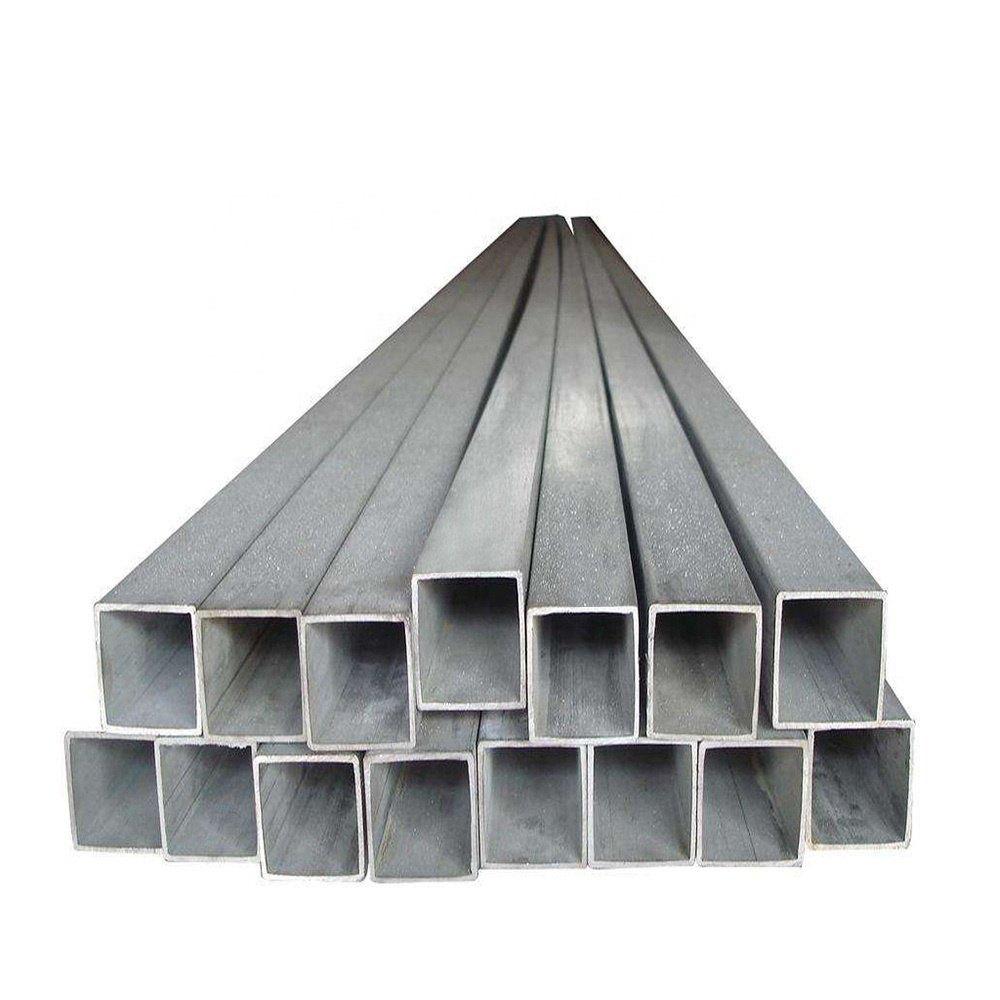 | GI Pipes We supply GI square pipes as part of our galvanized iron pipe range for businesses seeking dependable industrial piping solutions. View product → |
Frequently asked questions
What makes a GI pipe supplier reliable?
A reliable supplier demonstrates consistent grade and dimensions, provides traceability to a production lot, fulfils the stated quantity and controls delivery documentation.
What should a GI pipe specification include before requesting quotations?
State the nominal size, outside diameter, wall thickness or schedule, steel grade, pipe length, galvanizing standard, end finish, quantity, inspection documents and delivery requirements.
How do you check whether GI pipe galvanizing fits the service?
Confirm the zinc-coating requirement and inspect coating continuity, bare spots, runs, handling damage and pipe geometry. Match the coating and wall thickness to exposure, fluid and mechanical service.
What should you do when delivered GI pipes do not match the order?
Quarantine the nonconforming material, record the heat or batch numbers, compare measurements and certificates with the purchase order, and obtain a written disposition before use.
How should you compare GI pipe suppliers beyond the quoted rate?
Compare the delivered total, including freight, inspection, documentation, lead time, rejection risk, replacement support and the supplier's process for resolving nonconforming material.