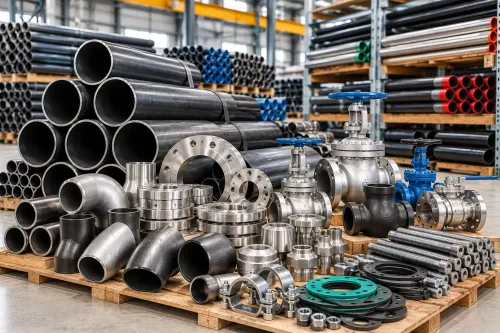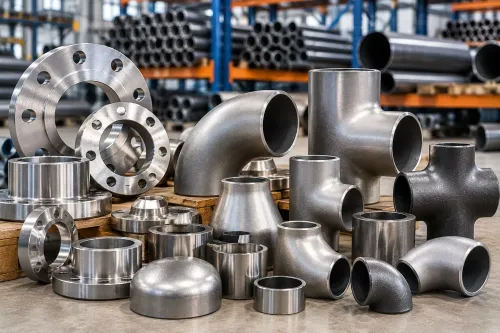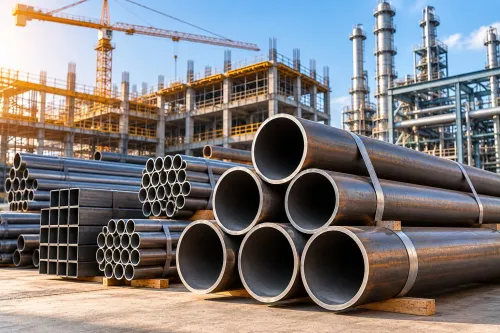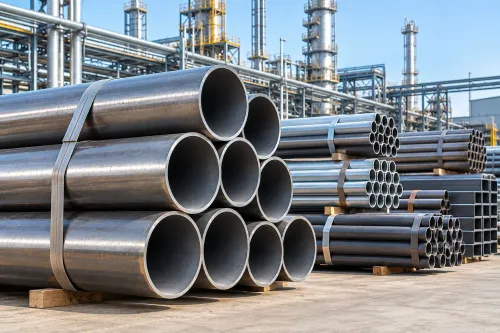
A steel purchase can fail before fabrication begins: the grade may not suit the load, the dimensions may not fit the drawing, or the certificate may not prove what arrived. By the end, you will know how to brief a supplier, compare pipe and tube specifications, verify material evidence, and plan delivery around the finished part rather than the catalogue line.
Key takeaways
- Submit drawings, tolerances, quantities, cut lengths, and delivery dates for technical review.
- Select steel from the finished part’s loads, joining method, environment, and service temperature.
- Specify pipe, tube, shape, size, wall thickness, and manufacturing route before fabrication.
- Match heat numbers, test certificates, markings, quantities, and dimensions against the purchase order.
What an Engineering Steel Supplier Should Handle Before You Order
An engineering steel supplier should turn your design information into an agreed supply plan, not merely send a product list. Submit drawings, part numbers, bill of materials, required standards, tolerances, quantities, cut lengths, surface condition, and delivery dates for technical review.
- Request drawing review for outside diameter, wall thickness, bend allowance, weld joints, machining stock, hole locations, and assembly fit-up. This catches a tube that meets nominal size but fails because of ovality, end distortion, or insufficient machining allowance.
- Require quantity planning by finished pieces, cutting yield, remnant control, replacement allowance, and bundle weights. Multiplying one section length by the part count ignores saw kerf, unusable remnants, handling weight, and damaged-piece replacements.
- Specify the cutting route for cut-to-length steel pipes and tubes. Saw cutting can leave burrs, flame cutting creates a heat-affected zone, and cold cutting can require deburring or edge preparation before welding, machining, or fit-up.
- Agree bundling, piece marking, packing, loading sequence, and delivery coordination before dispatch. Transfer each heat or batch number to cut pieces and remnants, then send the mill test certificate, cutting record, packing list, dimensional report, and delivery note with the material.
A capable supplier coordinates the delivery sequence with your fabrication bay or site. That reduces errors in interpretation, cutting, identification, and handling before they become fabrication delays.
How to Select Steel for the Finished Part
Select the steel family and grade from the part’s actual service, not from availability or price per kilogram. Define load type, pressure, design temperature, cyclic loading, corrosion exposure, required service life, corrosion allowance, joining method, and governing design code first.
| Option | Strengths | Reject or check when |
|---|---|---|
| Mild steel | Economical general fabrication; easy forming and welding | High strength, elevated temperature, or aggressive corrosion controls the design |
| Carbon steel | Broad structural and pressure-service range | Grade, test regime, certificate, and design code do not match |
| Alloy steel | Added strength, hardenability, or temperature performance | Welding procedure, preheat, or heat treatment becomes difficult |
| Galvanized steel | Zinc coating protects exposed steel | Coating damage, high heat, trapped zinc fumes, or tight post-coating tolerances matter |
| Stainless steel | Resists many corrosive environments | Galling, thermal expansion, cost, or the wrong chemical environment governs |
For pressure service, specify design pressure, fluid category, impact-testing need, sour-service qualification, inspection class, and corrosion allowance. A dimensionally compatible pipe can still fail acceptance because its grade or certificate is wrong.
Check machinability and forming method before ordering. A stronger alloy can increase tool wear and complicate welding and fit-up; galvanized steel needs agreed hole, thread, repair, vent, and drain details so trapped air, moisture, or zinc fumes do not create failures.
- Define service, loads, temperature, environment, and life.
- Select the exact grade and product standard.
- Confirm forming, welding and fit-up, machining, and heat-treatment requirements.
- Set inspection, traceability, and certificate requirements.
How Pipe, Tube, Shape, and Size Affect Fabrication
NPS 2 pipe has an outside diameter of 2.375 inches (60.3 mm), not 2 inches. Pipe versus tube matters at purchase: pipe uses NPS and schedule, while tube uses actual outside diameter and wall thickness. Therefore, “2-inch tube” is incomplete unless 2 inches means actual outside diameter or nominal pipe size.
For NPS 2, Schedule 40 has a 3.91 mm wall; Schedule 80 has a 5.54 mm wall. Schedule 80 reduces internal diameter and flow area, increases mass, changes threading compatibility, and raises pressure capacity. Confirm the design code, pressure, temperature, fluid, corrosion allowance, and joining method before substituting either schedule.
| Section | Bending | Connections and torsion | Appearance |
|---|---|---|---|
| Round tube or pipe | Similar resistance in every direction | Efficient for torsion; curved fittings and clamps | Cylindrical, visible weld alignment matters |
| Square hollow section | Strong on two principal axes | Flat faces simplify plates and welding; less efficient torsion than round | Clean, architectural lines |
| Rectangular hollow section | Stronger about its deep axis | Useful for directional frames and brackets | Broad face suits panels and visible structures |
ASTM A500 and EN 10219 hollow structural sections are not automatically interchangeable with pressure-rated pipe. Their corner properties, weld zones, tolerances, and intended service differ.
Check each separately before fabrication:
- Straightness and ovality
- Wall-thickness variation
- End squareness
- Dents and local distortion
- Mill scale
- Laminations
- Corrosion
Galvanized coating thickness can affect close fits, threads, and assembly dimensions. Agree hole locations, thread allowance, weld areas, vent holes, drain holes, and post-coating repairs before ordering.
Which Standard and Manufacturing Route Should You Specify?
Put the governing design code, service conditions, and manufacturing route on the purchase order—not merely “carbon-steel pipe.” ASTM A106 is seamless carbon-steel pressure pipe for high-temperature service; ASTM A53 covers general mechanical and pressure applications in welded and seamless forms. A53 is not an automatic substitute for A106.
| Specification | Construction and purpose | Confirm before ordering |
|---|---|---|
| ASTM A106 | Seamless, high-temperature pressure pipe | Grade, design code, temperature, hydrotest or NDE |
| ASTM A53 | Welded or seamless general pressure/mechanical pipe | Type, grade, pressure duty, substitution approval |
| API 5L | Pipeline transportation line pipe | PSL1 or PSL2, named grade, impact testing, sour-service controls, extra NDE |
| ASTM A500 | Structural hollow sections | Grade, shape, cold-formed welded route, corner and tolerance requirements |
| EN 10219 | Cold-formed welded structural hollow sections | Manufacturing condition, weld zone, residual stress, corner properties, tolerance class |
API 5L is not a generic replacement for every carbon-steel pipe. ASTM A519 mechanical tubing serves mechanical applications, not automatically pressure service.
Choose seamless or welded through the design code, pressure, temperature, cyclic loading, forming operation, tolerance, availability, and total cost. Seamless is not automatically stronger; welded pipe is widely used for structural, water, air, and general fabrication. Price per kilogram alone hides welding, inspection, handling, and distortion costs.
Require every quotation to state:
- Exact grade and product standard
- Manufacturing route
- Size and wall thickness
- Tolerance class
- Inspection regime
- Certificate level
How to Verify Certificates, Traceability, and the Delivered Order
A defensible match requires more than a mill test certificate. Check the delivered pieces against the purchase order and certificate before cutting or fabrication.
| EN 10204 type | Evidence supplied | What it proves |
|---|---|---|
| 2.1 | Compliance declaration, no test results | The supplier declares conformity |
| 2.2 | Non-specific test results | Results from comparable production, not the supplied heat |
| 3.1 | Specific results validated by the manufacturer’s authorized inspection representative | Results for the supplied heat |
| 3.2 | Specific results additionally validated by the purchaser’s representative or independent inspector | Extra acceptance oversight |
State the required certificate type at order stage. Then verify:
- Match the heat number, grade, product standard, chemical composition, tensile strength, yield strength, elongation, hydrostatic or nondestructive test results, dimensions, and heat treatment where applicable.
- Match that heat number to the bundle tag and piece markings. Identification must survive bundling, cutting, remnant storage, and delivery; mixed, unmarked stock cannot support defensible heat number traceability.
- Use positive material identification as a check, not a certificate replacement. Handheld X-ray fluorescence sorts alloys but generally does not measure carbon; optical-emission spectroscopy can measure carbon after controlled surface preparation. Neither proves wall thickness, mechanical properties, heat treatment, or internal soundness.
Compare suppliers on grade, standard, tolerance, finish, cutting method, certificate, packaging, delivery sequence, and total installed cost. Vikram And Company can help a Mumbai buyer coordinate those records with cutting, bundling, and delivery instead of accepting an unverified material line.
Related products
 | Alloy Steel Pipes & Products We supply alloy steel products for businesses looking for industrial steel sourcing support. View product → |
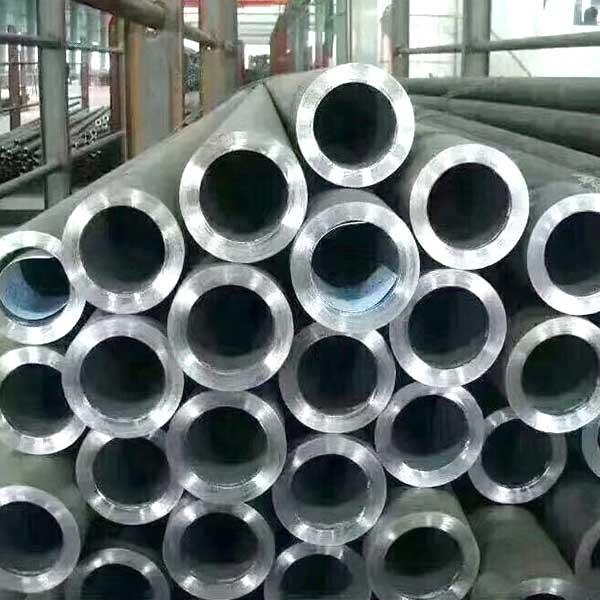 | Alloy Steel Pipes & Products We supply alloy steel pipes as part of our alloy steel product range for industrial and project sourcing requirements. View product → |
Frequently asked questions
What information should you give an engineering steel supplier before ordering?
Provide drawings, part numbers, a bill of materials, required standards, tolerances, quantities, cut lengths, surface condition, and delivery dates.
How do you select steel for a finished fabricated part?
Assess the part’s loads, joining process, operating environment, service temperature, corrosion exposure, forming requirements, and required mechanical properties.
How do pipe, tube, shape, and size affect fabrication?
The section type, outside or inside dimensions, wall thickness, length, straightness, and corner or profile geometry affect cutting, bending, welding, fit-up, and material usage.
Which steel standard and manufacturing route should you specify?
Specify the product standard, steel grade, dimensions and tolerances, delivery condition, surface requirements, and whether the route is seamless, welded, hot-finished, cold-drawn, or formed.
How can you verify steel certificates and traceability when the order arrives?
Match the heat number and product markings to the inspection certificate, then check grade, dimensions, quantity, test results, condition, and visible damage against the purchase order.
Related products
 | MS Pipes We supply mild steel round pipes for industrial and project-related sourcing requirements. View product → |
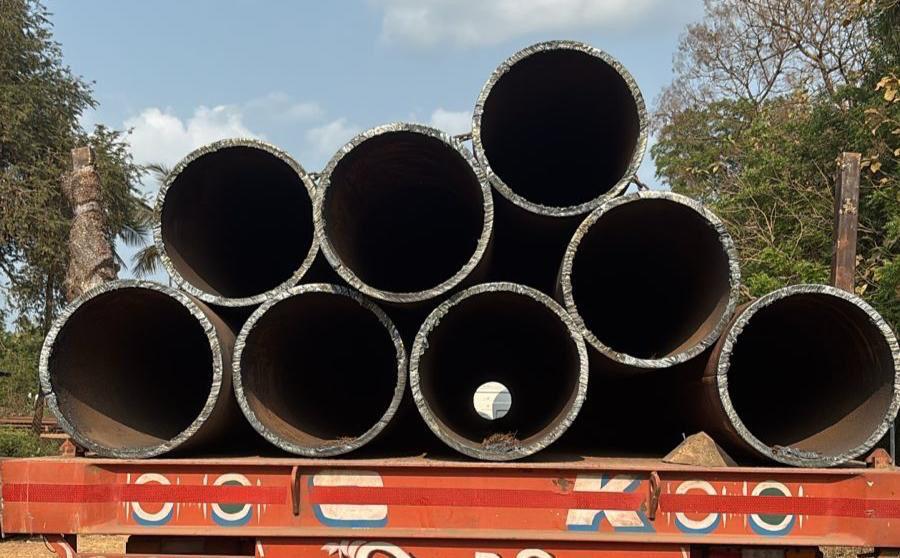 | Seamless Pipes We supply MS/CS seamless pipes for customers seeking seamless pipe solutions for industrial and project requirements. View product → |
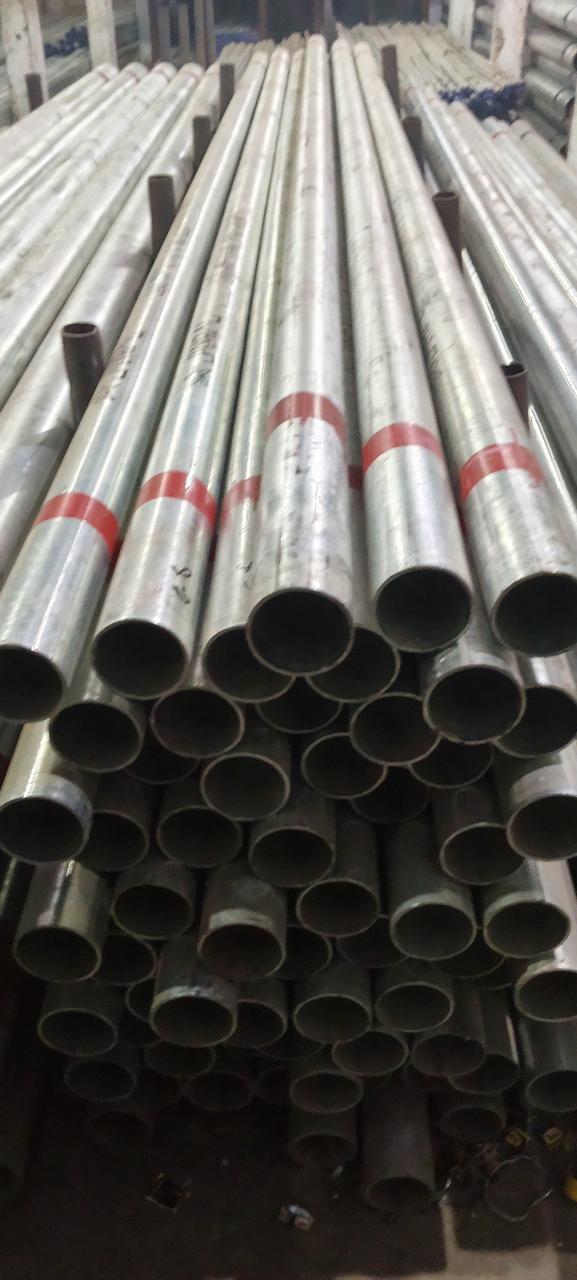 | GI Pipes We supply GI round pipes as part of our range of galvanized iron piping solutions for industrial and project requirements. View product → |
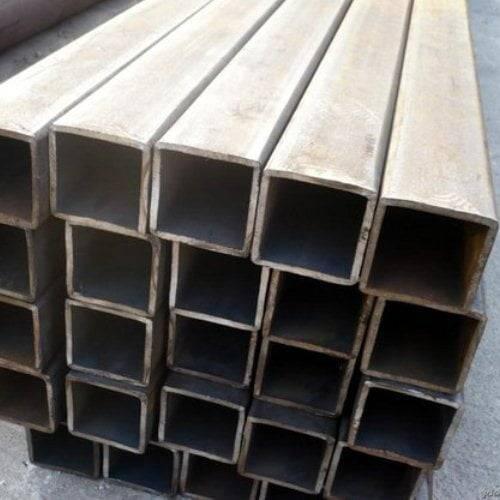 | MS Pipes We supply mild steel square pipes as part of our MS piping range for industrial, commercial, and project sourcing requirements. View product → |